Wednesday, 18 April 2018


Freezing Coffee???

Pop ’em in the freezer then get grinding. Every coffee fan has their own little recommendations for making the best cup of coffee. Seriously. You think the milk first or last debate is heavy? Try asking a bunch of coffee-drinkers their opinions on beans and filters. It’ll get heated. But there are some little tricks that all coffee-lovers can get behind – mostly because they’re easy, and make coffee just taste better, no matter how you make it. This is one of them. According to the New York Times, we should all be keeping our coffee beans in the freezer. Apparently freezing your beans (not a euphemism) makes your coffee richer and more flavourful. This is because when beans are colder, they produce smaller, more consistently sized particles once ground. This is a bigger deal than it sounds. Water extracts flavour from smaller coffee grounds faster than big ones. So when you have larger pieces of coffee or a mixture of large and small grounds, you won’t get the true taste of your coffee beans. By freezing your beans, you’ll be able to get a more consistent flavour and more flavour from a smaller amount of coffee beans. The trick works regardless of what type of coffee you’re using. It just makes every cup better – with hardly any effort. The deconstructed coffee trend is proof that we’re all doomed All you have to do is make sure to put your beans in an airtight container to avoid freezer burn or moisture, then pop them in the freezer.


Read more: http://metro.co.uk/2016/06/21/why-you-should-be-freezing-your-coffee-beans-5957295/?ito=cbshare

Twitter: https://twitter.com/MetroUK | Facebook: https://www.facebook.com/MetroUK/

Coffee and 420

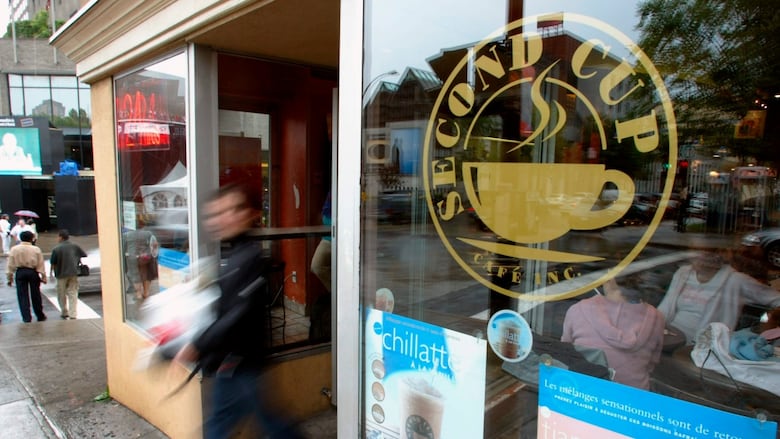
Joint partnership: Second Cup coffee chain teams with cannabis company to open pot shops

Coffee company has 286 locations across Canada, and some could be converted to sell pot

Coffee chain Second Cup is looking into the possibility of opening marijuana dispensaries in places where they will soon be legal. (Paul Chiasson/Canadian Press)

Coffee chain The Second Cup plans to open a network of recreational cannabis dispensaries, starting in Western Canada and then potentially moving east to other provinces where the drug is expected to soon be legal.

The coffee chain announced on Thursday it is partnering with National Access Cannabis Corp. to develop and operate a network of NAC-branded dispensaries across the country.

Founded in 1975, Second Cup currently operates 286 coffee shops across the country. Ottawa-based NAC, meanwhile, describes itself as a health-care company that consults with patients to help them get access and prescriptions to medical marijuana. NAC currently has nine locations across six provinces, including three in Calgary and one each in Victoria, Saskatoon, Winnipeg, Toronto, Ottawa and Halifax.

National Access Cannabis currently has nine locations spread across seven provinces. (CBC)

The plan is for NAC to apply for licences to dispense cannabis once it is legal, and then work with the coffee chain to "leverage Second Cup's extensive Canadian retail footprint to construct retail stores," as the companies put it in a press release.

It's possible that certain current Second Cup coffee shops would be converted into cannabis stores.

"We'll look to work with Second Cup to license select storefronts, utilizing our proven business model to deliver secure, safe and responsible access," NAC's CEO Mark Goliger said.

The federal government is on track to legalize recreational cannabis later this summer, but is leaving the logistics of how and where it can be sold to the provinces. Many provinces (most notably Ontario) are opting to go with government-controlled monopolies, but some — including British ColumbiaAlberta and Manitoba — plan to allow some form of cannabis sales by private retailers.

A consortium including NAC has already been selected by the provincial government in Manitoba as one of the companies that will be able to handle retail sales once they become legal.

Shares in both companies soared on the news, with Second Cup up by about 30 per cent and NAC shares up by about 10 per cent.

Robert Carter, executive director of food services at research firm NPD Group, said he sees potential in the partnership.

"The idea of a cannabis cafĂ©," he said in an interview with CBC News, "I think there's something there from an emerging business model."

He said the partnership is no sure thing, and Second Cup would have some issues with the fact that many of their locations are in residential neighbourhoods.

But with estimates of the size of Canada's recreational marijuana market being up to $2 billion in the first year, he said the two companies could both see benefits because they share a core customer demographic: millennials.

"The millennial cohort is really tied into the whole coffee culture," he said. "And branding from Second Cup with gourmet coffee may give some credibility to cannabis."

"There's still so many unanswered questions," Carter said, "but this is definitely creating some sparks and interest."


How Much Caffeine Is In My Coffee


Coffee Beans Roasting Sample

The Challenges of Measuring Caffeine Levels

By William (Bill) Murray, President & CEO, NCA
Twitter: @Bill_CoffeeAssn

Coffee has long been associated with energy and activity – the legend of coffee’s origin holds that it was discovered because of the energy kick it gave to goats eating cherries from a coffee tree.

Most coffee drinkers have that first cup of coffee early in the morning, whether decaffeinated or regular, to start their day. According to the latest National Coffee Drinking Trends Report, 81% of daily coffee consumers report drinking coffee at breakfast.

Despite the strong association between coffee and caffeine, the National Coffee Association (NCA), which was established in 1911, is only now publishing information on the levels of caffeine that may be found in coffee.

Why?

caffeine-level-coffee.png

1. There are more ways than ever before to consume caffeine.

In recent years there have been actual or proposed introductions of energy drinks, caffeinated peanut butter, caffeinated waffles, caffeinated chewing gum, and even powdered caffeine. With more potential sources of caffeine now available, consumers have taken greater interest in how much they may be consuming

2. Consumers have new tools to manage their health.

Research suggests that most coffee drinkers understand the correlation between coffee and caffeine, and instinctively make their choice – decaf or regular, espresso or half-caff – based on individual tolerance. Even so, apps are now available that allow coffee drinkers to precisely track caffeine consumption. Tracking consumption, along with accurate information about caffeine content empowers coffee drinkers to better manage their choices; and accurate, science-based information is part of that equation.

3. Answering the simple question “how much caffeine is in a cup of coffee” is reallycomplicated.

Caffeine levels vary by type of coffee, from farm to farm, tree to tree, and even roast to roast. The way the beverage is prepared affects the caffeine content of a cup of coffee – and of course, the size of your “cup.” This may be one reason that there is a lot of disparate information on caffeine levels that is publicly available, which can be hard to sort through.

The true answer to the question “how much caffeine is in my cup of coffee” is …“it depends.”

It’s the same as the answer to the question “how many calories are in a slice of pizza?” Are we talking stuffed crust pepperoni pizza, thin whole wheat gluten free veggie pizza, or deep dish pizza with sausage and extra cheese? (Speaking of calories, an 8oz. cup of black coffee contains about two calories – but back to the caffeine question.)

Given all of these complexities, we’re establishing a simple starting point, in the form of (a) an average caffeine level for a standard serving size, and (b) a range that reflects the caffeine variations that can be found in different preparations of coffee.

The information we’re providing is based on the collective knowledge, insight, and expertise of scientists from a broad range of disciplines who comprise our NCA Scientific Advisory Group, or SAG.

Especially important – since the NCA is a trade association representing industry, our data is sourced from third-party research, conducted independently of the Association. The “average” number we’re referencing is the same as that used by the US Government. The serving size upon which these values are based is also the serving size for a cup of coffee that is used by the US Government .

From here, consumers can find additional information in many places – starting with the website of their favorite coffee purveyors.

But there is one more piece to the caffeine puzzle: you. Your habits, your preferences, your tolerances, and even your physiology.

Everyone’s body has a different tolerance to caffeine. Some folks can guzzle a double shot of espresso and fall asleep within the hour. For others, a single shot might keep them awake until long past their regular bedtime. Or, as scientists would say, some people are “fast metabolizers” of caffeine, and others are “slow metabolizers,” depending on factors such as body chemistry, coffee habits, and even genes.

Of course, none of this is meant to serve as health advice – we simply encourage you to be an educated coffee drinker – to appreciate not only the rich flavors of coffee, but the rich complexity of coffee, of which caffeine is a component. And as you’re thinking about coffee, caffeine, and your own tastes and tolerances, remember that there’s always a fresh, hot cup of coffee waiting for you somewhere – regular, decaf, or half and half!

Learn more about coffee, caffeine, and your health.

tumblr_nfzketJ8qY1s30ko5o1_500.gif


Giving Back

How This Great Cup Is Giving Back


As global appreciation for high-quality, conscientiously sourced coffee has soared, craft-roaster pioneers like Peet's Coffee continue to lead the way. This time, it’s in the realm of social change at the farm level.

From the lush green hills of Rwanda, the farmer Mediatrice Uwamariya looks out on the 1,700 trees her family cultivates. “Life has changed because of coffee,” she says.

Since Uwamariya started growing coffee in 1997, she says her production has quadrupled. Her family’s quality of life now reflects the windfall that many smallholder farmers have enjoyed thanks to shifts in growing practices and increased demand from specialty buyers like Peet’s Coffee.

“Because of coffee, we get school fees for our kids, we raise animals — cows, goats and chickens,” says Uwamariya. “We bought this land and built a new house.”

Image: <span style="
color: #81694D;
">The farmer Mediatrice Uwamariya also grows sweet potatoes, beans, sorghum and bananas, but invests mostly in coffee, which reaps the highest earnings.
The farmer Mediatrice Uwamariya also grows sweet potatoes, beans, sorghum and bananas, but invests mostly in coffee, which reaps the highest earnings.

Like many farmers here, Uwamariya carefully maintains her coffee trees to produce the distinctive beans that have fueled the demand for specialty coffee in the United States, a movement sparked a half-century ago by Alfred Peet, the founder of Peet's Coffee.

The son of a Dutch roaster, Peet was born into the trade in the Netherlands. He traveled the world learning about coffee and tea before settling in Northern California in the 1950s and making his mark in the 1960s food revolution. In 1966, he opened his first cafe on Vine Street in Berkeley.

Peet and his cafes popularized the concept of hand roasting and brewing high-quality beans for modern American palates, becoming the archetype for myriad coffee businesses in the decades that followed. Today, his eponymous brand is giving back to the farmers behind its coffee.

A New Way to Experience Coffee 

“I CAN REMEMBER my first cup of coffee at Peet’s,” says Doug Welsh, who frequented the company’s original cafe in the 1980s when he was a student at the University of California, Berkeley. “It was a cup of Sulawesi Kalossi that I drank black. Before Peet’s, I reflexively put milk and sugar in coffee. But by the time I got to the middle of that cup, I knew coffee could taste so sweet and amazing and complex, it didn't need any of that adulteration.”

The revelation was one that would shape Welsh’s career. Soon after those seminal sips, he began working behind the counter at the cafe. Today, he is Peet’s roastmaster.

“Back then, it was rare to taste a beautifully sourced, perfectly roasted, expertly brewed, properly strong cup of coffee. That just wasn't a thing,” Welsh says. “Now, some 30 years later, it's amazing how much good coffee there is.”

Brewing Some Good in the World 

TODAY, PEET’S CONTINUES to inspire not only in the pursuit of sourcing and roasting exceptional coffees, but also in its commitment to social responsibility in coffee-producing communities through initiatives like Drink a Great Cup, Do a Good Thing. This year’s effort will provide better access to clean water for Rwandan coffee farmers like Uwamariya.

Specialty coffee was a relative unknown in Rwanda just over a decade ago. But in the nearly 25 years since the country’s genocide, nonprofit and government-supported programs have helped elevate coffee from a low-priced commodity to a high-caliber crop, aiding the economy’s regrowth. For the more than 400,000 farmers who cultivate coffee here — where the average farm size is less than a quarter of an acre — training and stewardship from roasters like Peet’s have had a direct improvement on their crop yield and quality.

In fact, it was the interest and guidance from buyers like Peet’s that contributed to the development of centralized washing stations within local coffee cooperatives.

Image: <span style="
color: #81694D;
">The farmer Leonard Munyakaragwe with his children outside of his home in the Muhura District.</span>
The farmer Leonard Munyakaragwe with his children outside of his home in the Muhura District.

“I used to process [my coffee] at home before we got a washing station in this area,” says Leonard Munyakaragwe, who has seen a sevenfold growth since he began farming the crop a decade ago. He now produces upwards of six tons of coffee in Rwanda’s Muhura District and is earning enough to have joined a savings cooperative.

Despite these improvements, obtaining clean water is still challenging for many farmers, and the process can take hours.

After the farming community identified water access as an urgent need, Peet’s chose to dedicate a portion of the proceeds from its annual Anniversary Blend to build water tanks with four access points. Pumping from the source to the highest point in the village, the tanks provide water for 2,000 coffee-growing families in the Gatsibo District of Rwanda’s Eastern Province.

It’s a virtuous cycle, Welsh says. “We become inspired by a coffee flavor and work to create this brilliant cup,” he says. “Then we work with the farmers to figure out the best thing we can do with the proceeds.”

We need to do our part to ensure the future of coffee for coffee farmers.
Matt Broscio

Sowing Seeds for Success 

PEET’S COMMITMENTS TO support coffee-producing communities can also be seen in its Farmer Assistance program. “We need to do our part to ensure the future of coffee for coffee farmers,” says Matt Broscio, Peet’s social responsibility manager. The program helps mitigate challenges such as erratic weather, increased risk of tree pests and diseases, higher production costs and land development pressures by offering training in quality-coffee processing, farming best practices and critical business skills.

Ethiopia, where coffee is said to have been discovered and where it still grows wild, is, according to Welsh, “unchallenged as the origin of the finer-tasting class of coffees.” But along with Ethiopia’s rich coffee history came a raft of aging trees and antiquated farming practices that inhibited production and quality. In the country’s Jimma region, Peet’s collaborates with nonprofit economic development groups like TechnoServe, an organization that specializes in assisting coffee growers in developing countries.

Paul Stewart, TechnoServe’s global coffee director, remembers a time when farmers would dry beans outdoors. “You could see some mold on them,” Stewart recalls. Today, practices like these are a thing of the past, and smallholder farms have access to cooperative mills where they can deliver coffee to processing facilities that ensure top quality.

Image: <span style="
color: #81694D;
">The farmer Nasir Eba, right, and his wife, Muhaiebu, discuss agronomy with Megartu Fekadu Chewwaka, left, from Peet’s Farmer Assistance program.
The farmer Nasir Eba, right, and his wife, Muhaiebu, discuss agronomy with Megartu Fekadu Chewwaka, left, from Peet’s Farmer Assistance program. 

Combined with the rising demand and prices for specialty coffee, Broscio says the training and access to quality-focused cooperatives has had “a multiplier effect” on the participants’ crop yields and incomes, allowing for investments in their farms, homes and even new businesses.

“There were times when I was frustrated and even thinking of abandoning coffee farming, due to the price and the middlemen in the market,” says Nasir Eba, a coffee farmer in Jimma. “Now I am expanding my coffee farm. Thanks to my cooperative, my life and that of my family has changed.”